

In This Article
Walk through almost any newer neighborhood in Meridian, Nampa, or Eagle and you’ll see a lot of landscape rock. It looks clean, it never needs topping off, and it seems like the obvious low-maintenance choice for a dry climate. But if those rock beds have trees and shrubs in them, the rock may be working against the plants you’re trying to grow.
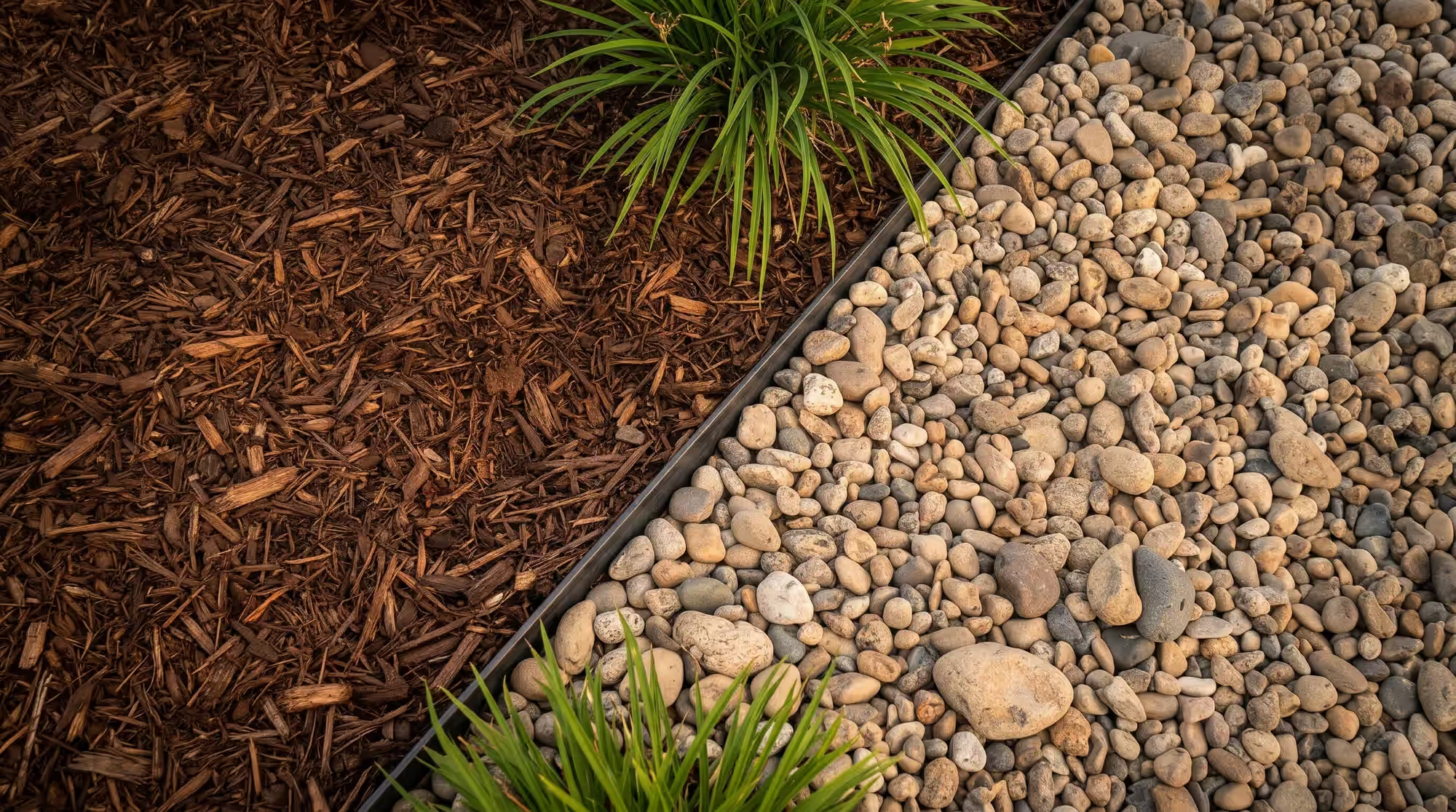
Mulch and rock both have a place in a Treasure Valley yard. The right choice depends on what’s growing in the bed, how much sun it gets, and how close it sits to your house. Here’s how the two compare in our hot, dry summers and cold winters.
Mulch vs. Rock at a Glance
| Wood Mulch | Landscape Rock | |
|---|---|---|
| Summer soil temperature | Shades soil and keeps roots cooler | Soaks up sun and radiates heat into the bed |
| Moisture | Slows evaporation from the soil | Little help in full sun |
| Soil health | Breaks down and adds organic matter | Adds nothing to the soil |
| Upkeep | Top off every 1–2 years | Rarely replaced, but weeds root in the dust and debris between stones |
| Best for | Trees, shrubs, and garden beds | Foundation strips, drainage areas, and plant-free zones |
Rock Holds Heat, and Roots Feel It
Treasure Valley summers bring long stretches in the 90s and plenty of 100°F days. Rock soaks up that sun all day and keeps giving off heat well into the evening. Soil under rock in full sun runs noticeably hotter than soil under mulch, and the heat reflects up onto low branches and bark too.
That matters because most of a tree’s fine feeder roots live in the top foot of soil. As we covered in our post on why most trees don’t actually have deep taproots, roots spread wide and shallow, right under whatever you put on the surface. Hot soil stresses those roots at the exact time the tree needs the most water.
Common signs of heat stress in rock beds include:
- Brown, crispy leaf edges, especially on the south and west sides
- A thinning canopy
- Early fall color or leaf drop in late summer
Mulch works the opposite way. A 2–4 inch layer shades the soil and keeps root temperatures steadier through the hottest part of the day.
Water and Soil: Where Mulch Pulls Ahead
Water Use
In our semi-arid climate, water is the biggest limit for most landscape plants. Mulch slows evaporation from the soil surface, so water from your sprinklers or drip lines stays in the root zone longer. Rock beds in full sun often need more water to keep plants healthy, not less. That surprises a lot of homeowners who chose rock to save water.
Soil Health
Mulch also improves your soil as it breaks down. The clay soils common in Nampa and Caldwell slowly gain better structure and drainage. Sandier soils hold water better as organic matter builds up. Rock adds nothing to the soil, and the landscape fabric usually laid under it can keep water and air from reaching roots.
Weeds
Rock looks weed-free the first year. Over time, dust, leaves, and grass clippings settle between the stones, and weeds take root in that layer. Pulling weeds out of rock is a lot harder than pulling them out of mulch.
Where Rock Makes Sense
Rock isn’t the wrong choice everywhere. It’s the better option in a few spots:
- Right next to your house. Wildfire safety guidance recommends keeping the first 5 feet around a home free of flammable materials, including wood mulch. This matters most for homes near the Boise Foothills and other wildland edges.
- Drainage areas. Downspout outlets, dry creek beds, and low spots where water runs through will wash mulch away.
- Strips with nothing growing. A side yard along the driveway or a gap between the fence and the sidewalk doesn’t need the soil benefits of mulch.
- Desert-style plantings. Cactus, yucca, and other dry-climate plants like heat and fast drainage, so rock suits them.
You Don’t Have to Pick Just One
Many of the best-looking yards in the Treasure Valley use both. A common setup is a rock border along the foundation, with mulch beds and tree rings beyond it. The rock handles drainage and the fire buffer, and the mulch takes care of the plants.
If you already have rock around your trees, you don’t need to redo the whole yard. Start with the trees:
- Pull the rock back from the trunk, at least 3–4 feet out. Going all the way to the drip line is even better.
- Take out the landscape fabric in that ring so water and air can reach the roots.
- Water the area if the soil is dry.
- Spread 2–4 inches of wood mulch, keeping it a few inches away from the trunk.
For more on getting the depth and spacing right, see our guide to the benefits of fall mulching for trees, gardens, and flower beds.
Choosing the Right Mulch
Once you know where mulch belongs, picking a color mostly comes down to the look you want:
- Natural Mulch (Undyed) has an earthy tone and no colorant. It’s a good fit for vegetable gardens, pathways, and anyone who wants a dye-free option.
- Cocoa Brown Mulch is the classic look for flower beds and tree rings.
- Impact Black Mulch gives strong contrast and pairs well with a gray or white rock border.
All three are made from clean wood and are safe for pets and kids. We deliver across the Treasure Valley with a 10-yard minimum, or you can pick up by the yard at our Nampa yard. Use the calculator on our bulk mulch page to figure out how much you need.
If your trees are already showing signs of heat stress after a summer in rock, our ISA-certified arborists can take a look. A quick tree diagnostic can tell you whether a change in ground cover is enough or whether the tree needs more help.


